

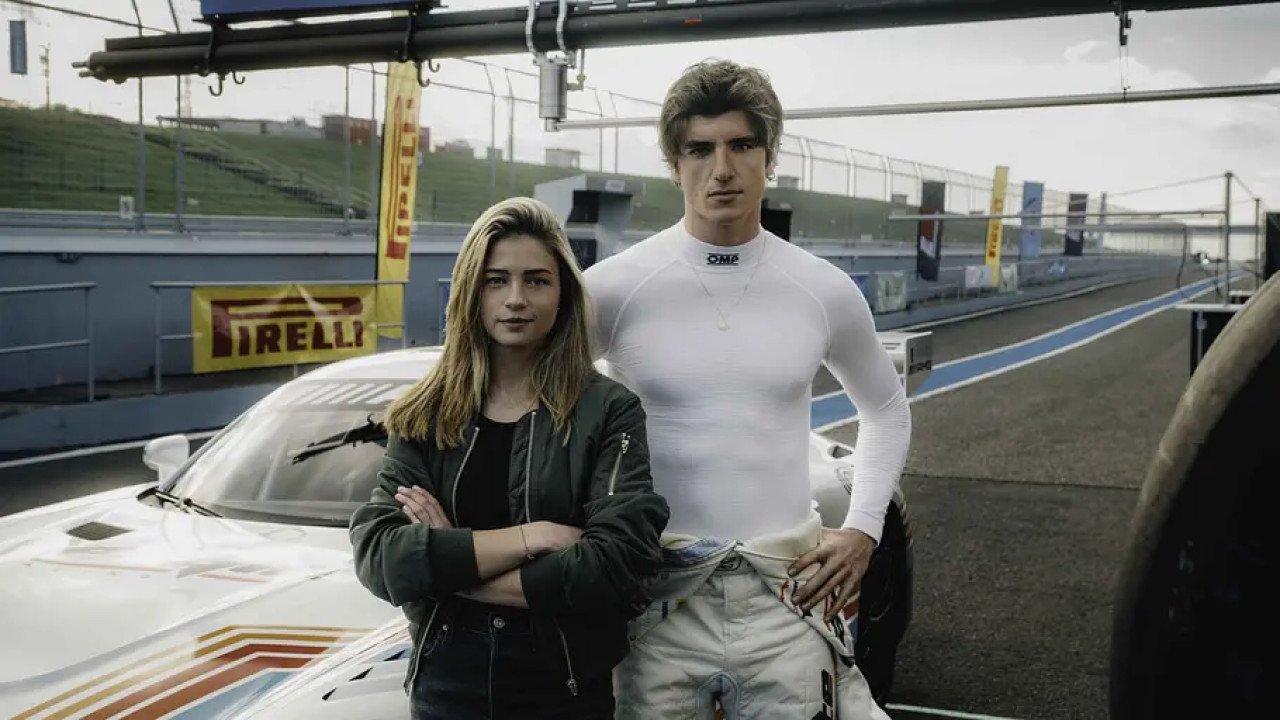
Drive – The Pretenders does not reward Sarah Jenkins by making her Dante Annunziata’s girlfriend. The romance becomes real, but the final professional offer belongs to Sarah: Eagle wants her as its new number-one driver, not as a marketing prop. Dante’s answer is to stop treating her as someone who has to race in his shadow.
Spoiler warning: This article explains the ending of Drive – The Pretenders (2026).
Why Dante almost throws away the German Grand Prix
Dante enters the final race with the ability to win, but the pressure that has followed him through the film catches up with him. He ignores the call to change worn tires, hits the barrier and then freezes in the pit while his lead disappears.
The important moment is not a technical trick that saves the race. Dante has to decide whether he still wants to drive. The encouragement he receives pushes him back onto the track, and he eventually overtakes Paulsen to win the German Grand Prix.
That victory restores something Dante had lost long before the checkered flag: racing becomes a choice again instead of the only identity available to him.
When does the fake engagement become real?
The public story around Sarah and Dante began as reputation management. Their engagement was useful because his image needed repairing and she wanted a real chance inside a sport that kept treating her as support staff.
By the end, neither needs that contract to explain why they stay together. After Dante wins, he leaves the podium looking for Sarah rather than treating the race as the only thing that matters. Their departure makes the point deliberately simple: the relationship that began as a performance has outlived the reason it was created.
Why Sarah’s Eagle offer matters more than the romance
The last call changes Sarah’s position in the story. Eagle tells her it wants her “not as a marketing gimmick, but as a driver” and offers her the number-one seat. The line directly answers the frustration that has shaped her career: she wanted to be judged for what she could do behind the wheel.
Dante may have an opportunity in Formula 1, but he does not ask Sarah to follow him. When she tells him about Eagle, he tells her to accept. He then jokes that he might stay so he can watch her smile in his rearview mirror.
That reversal is why the ending works better than simply giving Dante another trophy. Sarah enters his world needing access; she leaves with a team choosing her on merit. The romance survives because it no longer requires one career to become secondary to the other.
For another romance where the ending refuses to force two people into identical futures, see our Let’s Have Kids! ending explained. Drive arrives at the same idea through competition: love becomes believable once Sarah’s ambition is allowed to remain her own.
0 comments