

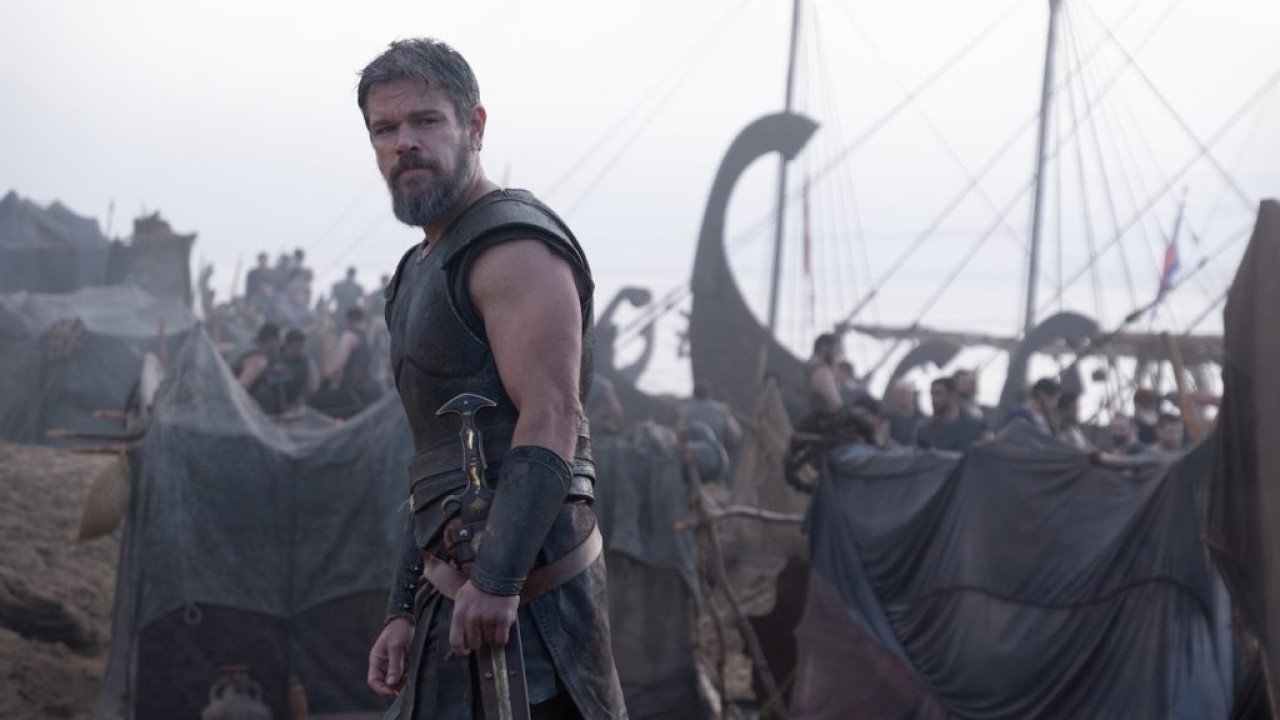
Christopher Nolan’s The Odyssey ends with Odysseus returning to Ithaca but refusing to rule it. After he kills the suitors occupying his palace, he tells Penelope that he is not dying. He is going into exile. Telemachus will become king, and Odysseus and Penelope will head west together.
Spoiler warning: This article explains the 2026 film’s final sequence.
How Penelope turns the bow contest into a trap
The suitors expect Penelope to choose a husband. She announces a test with Odysseus’ hunting bow: string it and shoot through twelve axes. The contest is designed to reveal a man strong enough to claim his place, while the trusted servants remove the palace weapons and lock the doors.
What the suitors do not recognize is that the old stranger in the room is Odysseus. When he strings the bow and takes his turn, the contest stops being about marriage and becomes a reckoning. Telemachus and the loyal household members are already positioned to prevent the suitors from reaching their weapons.
Why Odysseus kills the suitors
The men have occupied his home, consumed its resources, harassed his family and acted as though a missing king means the laws of hospitality no longer apply. Odysseus sees their deaths as his responsibility. He tells Telemachus that their blood belongs on his hands, not his son’s.
The battle reclaims the palace physically, but it does not erase the cost. Odysseus has returned as a man shaped by the war at Troy. The violence that restores his family’s home is also the kind of violence he believes helped break the old world.
Why he leaves Ithaca after finally reaching it
Penelope thinks Odysseus is saying goodbye because he is about to die. He corrects her: the consequence is exile. He has killed the suitors and knows his actions carry a penalty. He refuses to pretend that coming home makes him exempt from the order he has disrupted.
Telemachus will take the throne. Odysseus plans to sail west, and Penelope chooses to accompany him. The reunion is therefore real, but it is not a restoration of the old royal household. They gain each other while leaving the kingdom behind.
What the last narration says about the Trojan Horse
The film repeatedly returns to the idea of a single ingenious trick that helped destroy the fragile bonds between societies. Its final narration connects the sack of Troy with the collapse of the Bronze Age order: palaces, trade and literacy can all disappear when men abandon the rules holding them together.
Odysseus knows tricks can win wars without securing a world worth living in. The story closes on a voyage toward an unknown horizon, not a throne. Our Game of Thrones finale explained offers a different version of the same separation: political succession and the fate of the person who helped shape it are not necessarily the same ending.
0 comments