

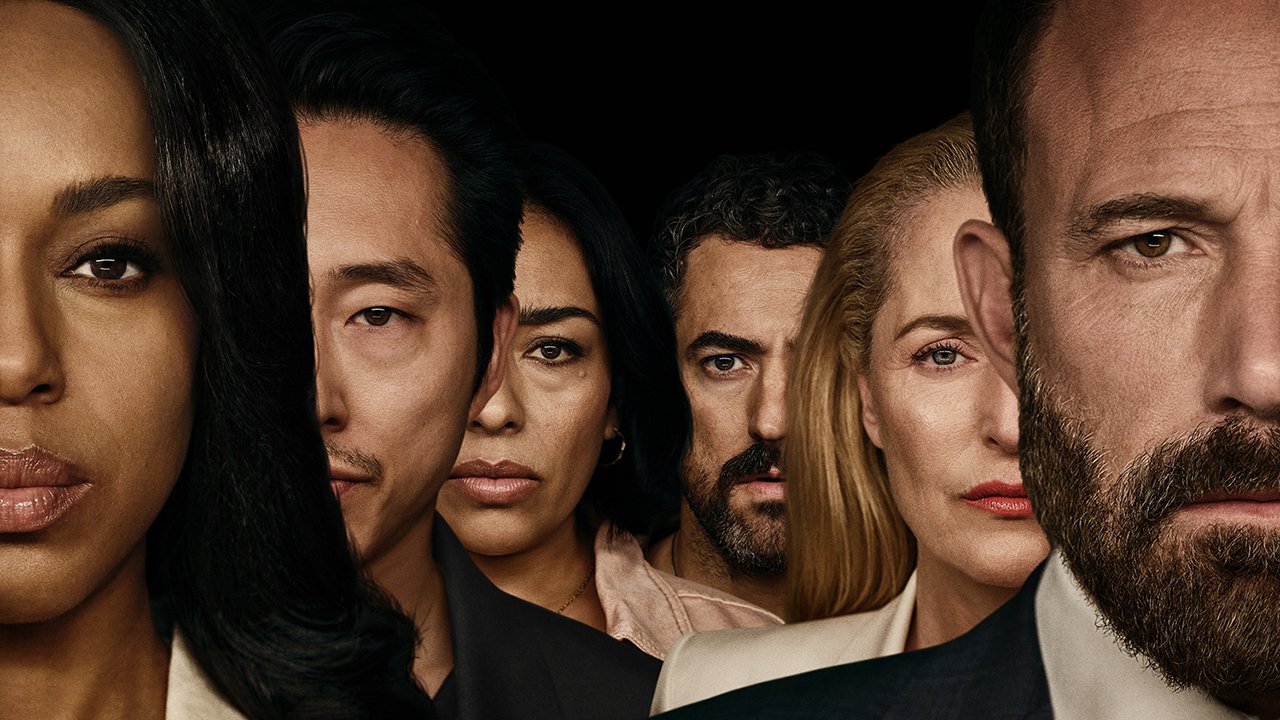
Ramon is the real hero at the end of Animals, but Mark Kimball is the man who gets rewarded. Ramon shoots the final kidnapper and saves both Hector and Mark. Minutes later, the two begin turning what happened into a different story — one that helps Ramon protect his family and turns Mark into a political star.
The final twist is not simply who fired the gun. It is how easily the truth can be rewritten when everyone who knows what happened has something to gain from the lie.
Spoiler warning: This article explains the ending of Animals (2026), including Hector’s kidnapping, Dayle’s fate and Mark’s final television interview.
What happens at the end of Animals?
Hector survives, Ramon kills the last kidnapper, Dayle dies, and Mark uses a false version of the rescue to win the Los Angeles mayoral election. The film then jumps ahead to show that the same story has put Mark in the conversation for president.
The chain of events begins with the movie’s biggest mistake: the kidnappers never took Mark and Abigail’s son Denny. Denny simply got lost after entering the haunted house. Hector, who had been wearing the same costume, was the child abducted.
What is “option three”?
Dayle gives Mark three choices: call the police, pay the ransom or choose a third option that must remain secret. Mark eventually makes that choice explicit: once Hector is safe, he wants Dayle’s man to kill whoever comes for the money.
That decision matters because Mark can no longer claim he simply did whatever was necessary to rescue a child. He knowingly orders a lethal plan while also trying to protect his money, marriage and campaign.
The setup resembles the moral trap at the center of our Masterplan ending explained: the plan may work on paper, but the person controlling it does not actually control what happens once other people start making their own choices.
Who actually saves Hector?
Ramon saves Hector — and Mark. Dayle believes there are only two kidnappers. Her shooter kills both men who approach the ransom, but a third attacker has been waiting out of sight.
The third kidnapper shoots Dayle and her associate, then advances on Mark and Hector. Ramon, who has followed the situation himself, fires the shot that kills him.
Does Dayle die?
Yes. Dayle is fatally wounded during the failed ambush. Mark finds her still alive but takes her phone, which contains recordings of his instructions — including his order to have the kidnappers killed.
Her death removes the person with the most dangerous evidence against him. Instead of exposing what happened, Mark gains control of the story.
Why does Ramon let Mark take the credit?
After the shooting, Mark calls Ramon a hero. Ramon’s answer — “Depends on who you ask” — anticipates everything that follows.
Ramon is undocumented. Publicly admitting that he used the rifle would expose him to consequences Mark is far better positioned to survive. The version presented afterward reverses their roles: Ramon supposedly went to recover Hector while Mark followed with his father’s rifle and made an extraordinary shot from roughly 200 yards.
That story is false. Ramon fired the shot. Mark accepts responsibility for lesser firearms offenses, while Ramon later accepts voluntary deportation and returns to Mexico with Cecilia and Hector. The ending also indicates that Ramon leaves with the money recovered after the rescue.
For another thriller in which the official version hides a much larger crime, our Mutiny ending explained follows the gap between what authorities are told and what actually happened.
Does Mark become mayor?
Yes. Mark wins the election. The supposed rescue boosts him by 16 points with Latino voters in the final days of the race. Less than a year later, an interviewer tells him that he is already appearing on lists of possible presidential candidates.
The irony is sharper because Mark previously admits privately that he wants to become president. On television, he denies having much ambition for the job even though an exploratory committee has already been created.
Who kidnapped Hector?
The film never gives the kidnappers a confirmed identity. The surviving attacker tells Mark that Mark destroyed everything he had and left him with nothing to lose, establishing a personal grievance. But the movie deliberately stops short of naming him or fully explaining what Mark did to him.
That omission matters. The kidnapping begins as the apparent central mystery, but by the end the kidnappers themselves are almost secondary. The more consequential question is what Mark does once the immediate threat is gone.
What does the ending of Animals mean?
The last interview completes the film’s reversal. Asked what it felt like to take a life, Mark describes the moment as something that “had to be done.” But the audience knows he is discussing an act Ramon actually committed while benefiting from a story built around himself.
Animals therefore ends less as a mystery about a kidnapping than as a story about who gets to define heroism. Ramon saves his son and disappears from the American story. Mark manipulates the same event, wins an election and potentially opens the road to the White House.
The title fits that moral question. Earlier, Dayle argues that decency separates people from animals; her answer is that humans are animals who tell stories. By the final scene, Mark has proved how powerful those stories can be when the person telling them also has money, status and an audience.
If you prefer endings built around a final revelation rather than a cover-up, see our Finding Emily ending explained, where the last act also forces the audience to reconsider the story it thought it was following.
Where can you watch Animals?
Animals is a 2026 thriller starring Ben Affleck, Kerry Washington and Gillian Anderson. The movie is streaming on Netflix.
0 comments