

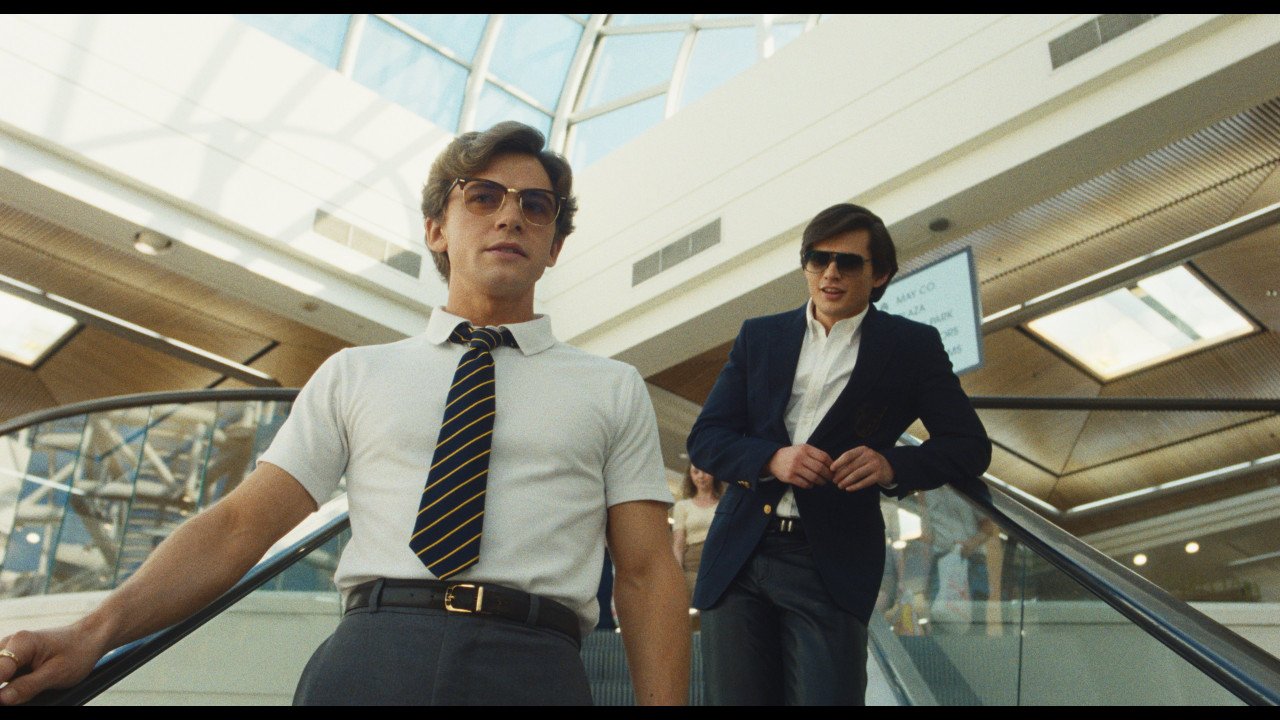
The Shards Season 1 ends with evidence that appears to trap Robert Mallory — and then refuses to name him as the Trawler. Bret enters the finale convinced he has finally proved his theory, but the last police scene deliberately puts Bret, Robert and the rest of the group back inside the same circle of suspicion.
Spoiler warning: This article explains Episodes 8 and 9 and the Season 1 ending of The Shards.
Why Bret becomes certain Robert is the Trawler
Episode 8 gives Bret the confirmation he has been chasing. A family connection places Robert at a screening of The Shining with Katherine Latchford, identified as the Trawler’s first victim. Robert had denied being there, which makes the lie look like an attempt to hide a direct connection to Katherine.
For Bret, that is the missing piece. He stops treating Robert as merely suspicious and begins treating his own theory as solved. The problem is that the finale keeps showing how obsession can turn circumstantial connections into certainty before an investigation has actually reached the same conclusion.
Why Robert turns the accusation back on Bret
When Bret confronts him, Robert does not offer the confession Bret expects. Instead, he attacks the story Bret has constructed and points back at Bret’s own secrets, absences and motives. Their relationship has become so unstable that each can explain the other as the dangerous person in the room.
The accusation is especially effective because Bret is narrating events through fear, desire and ambition at the same time. His attraction to Robert has never existed separately from his suspicion of him. By the finale, intimacy and investigation have become almost impossible for Bret to separate.
What happens to Terry at the Halloween party?
The Halloween party adds another apparent attack. Terry Schaffer falls and is initially treated as though he may be dead, but he survives on life support. That matters because a living witness could potentially identify whoever attacked him.
Bret assumes Robert is responsible. Robert, in turn, points out that Bret also has a possible motive: Terry had optioned Bret’s treatment, tying the incident to Bret’s hopes of breaking into Hollywood. Once again, the finale gives each accusation a counter-accusation rather than a clean answer.
Who do the detectives think committed the murders?
The final scene is the season’s sharpest reversal. Bret arrives ready to tell detectives everything he knows about Robert. Police instead announce that they have evidence connecting Katherine Latchford’s murder, Matt Kellner’s murder and Rhonda Fox’s kidnapping.
They believe the crimes were committed by the same individual. Then they say that individual is someone in the room.
That statement narrows the mystery without solving it. The ending does not show an arrest, identify the evidence or confirm Bret’s theory. In that respect, it resembles our True Detective Season 1 ending explained: what investigators can establish and what the story chooses to resolve are not necessarily the same thing.
The final narration promises a before and an after, then stops just as the group is forced to look at one another differently. Season 1 ends with Bret feeling vindicated, Robert still pushing back and the police holding information neither boy controls. The Trawler mystery has tightened around the room, but the name at its center remains deliberately withheld.
0 comments