

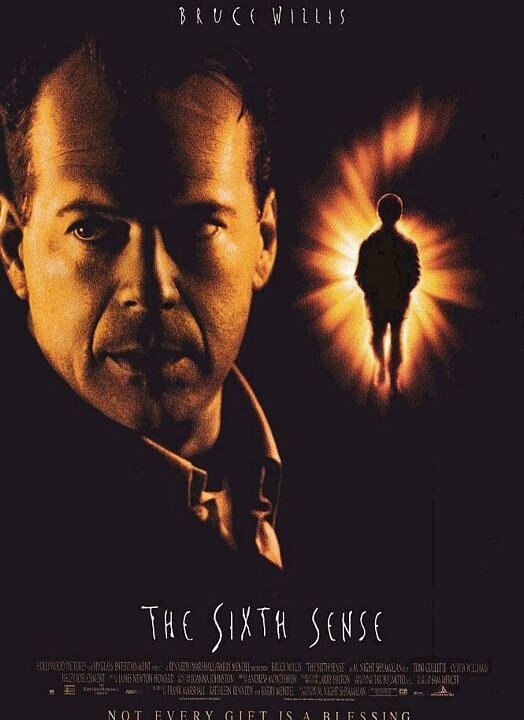
Spoiler warning: This article reveals the ending of The Sixth Sense (1999).
The short answer
Malcolm has been dead since Vincent Grey shot him near the start; he has been helping Cole from the afterlife. But what makes the reveal linger isn’t only the trick. The question is: what can Malcolm finally say to Anna once he understands why she can’t answer? The last scene turns a mystery into a goodbye.
Clues in the silence
The film gives us a fair trail without announcing it. People talk around Malcolm rather than to him, and Anna’s distance first looks like a troubled marriage, not evidence she is a widow. Cole is the exception: the boy sees and hears the dead. Psychiatric Times notes that only Cole can hear Malcolm. On a second viewing, those silences become evidence, not gaps.
In a YouTube interview, Shyamalan says the story began with a character question: why weren’t the couple speaking? A Los Angeles Times retrospective reads Malcolm’s work focus as the film’s larger concern with loved ones left unattended. The ending changes what the silence means rather than rewriting it.
The ring makes everything click
As Anna sleeps beside their wedding video, a ring falls to the floor. Malcolm notices the bare ring finger on his own hand and understands: he died after Vincent shot him and never returned to the living. The ring is a physical clue, but the emotional reading is open: Anna’s distance may be grief, while Malcolm still misunderstands it.
A goodbye, not a victory
The final conversation is one-sided. Malcolm tells Anna that he loves her and says goodbye; she never wakes to answer. This is not a reunion that erases grief. One reading is that it releases them both: now he knows why he cannot reach her, and she can be left to mourn without his ghost mistaking her silence for a problem he can solve. The film doesn’t spell out Malcolm’s awareness of his own death before this moment, so it’s safer to read the reveal as making his behavior legible, not as proof he knowingly ignored Anna.
More than a gotcha, the ending asks us to notice how a life spent serving others can crowd out intimacy at home. That is an interpretation, not a diagnosis the film states. For more explainers, browse our Movie Endings archive.
0 comments