

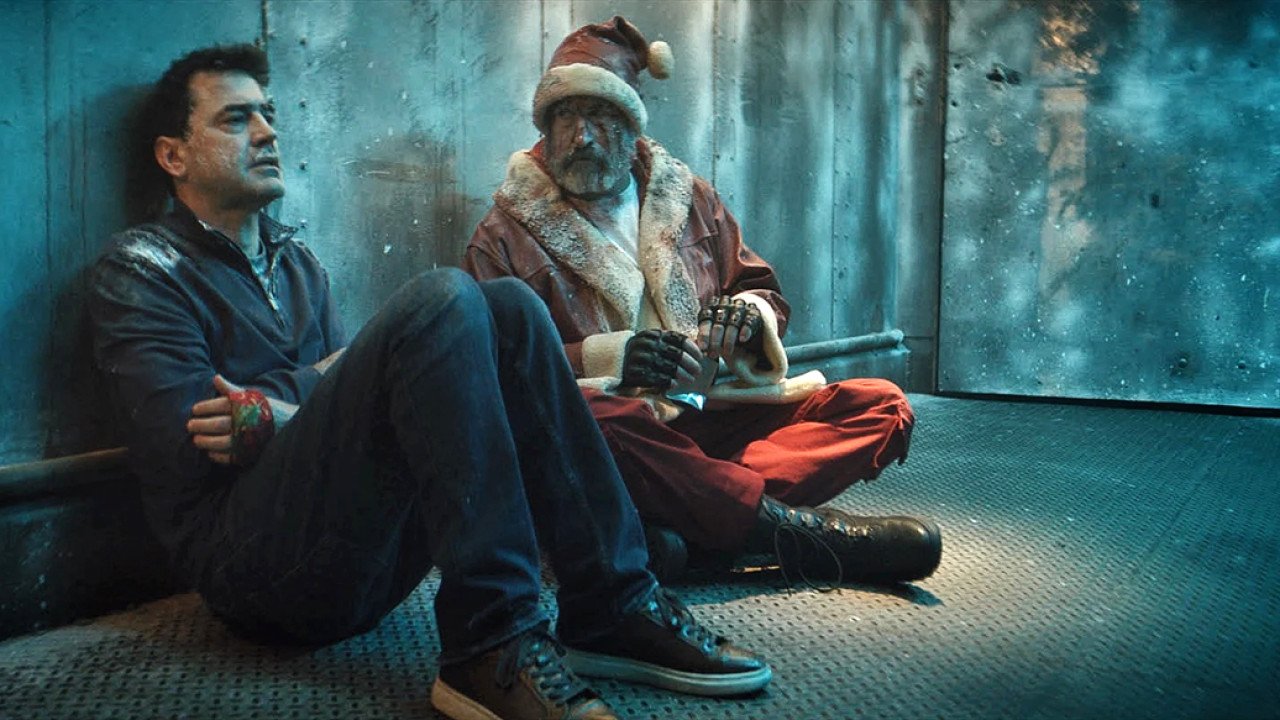
Christmas at the Kringles lets the Severson family escape a violent Christmas cult, then brings their improbable Santa ally back from an apparent death. When the family asks how he survived, he refuses to give them an answer. The joke is also the final ambiguity: the movie never proves whether there was real Christmas magic or simply one more wild escape.
Spoiler warning: This article explains the ending of Christmas at the Kringles (2026).
Why the Kringles are more dangerous than their decorations
The family next door initially appears to represent an exaggerated holiday ideal. Their enthusiasm never turns off, and Christmas seems to govern everything about their home. The Seversons soon discover that the traditions are demands rather than invitations.
The Kringles are part of a cult that wants to absorb and control their neighbors. The horror comes from the gap between the cheerful language and the threat underneath it. Joy is not something a person is allowed to feel freely in that house; it is something the family intends to enforce.
How the Seversons get out
The final confrontation breaks the facade completely. Weapons, threats and attempts to force obedience replace the smiling household rituals. Mark and Julie fight to get their family free, with help from the disreputable Santa who has become their unlikely ally.
The violence does not produce a newly perfect family. It gives them a reason to stop confusing an attractive image of domestic happiness with the reality of people caring for one another. The closing family exchange suggests they are done letting someone else’s version of Christmas dictate their lives.
Why Santa reappears after the danger
The supposed dead helper returns, greeting the family as though nothing unusual has happened. They ask the obvious question: how can he be alive? He says revealing the answer would spoil the mystery, then offers a mundane explanation for why they have not seen him at the local mall. He has a better-paying job elsewhere.
This is not firm evidence that he is an immortal Santa Claus. The film plays with that possibility while keeping its explanation deliberately offscreen. His ordinary talk about work undercuts the magical claim at the same moment he makes it.
What the final Christmas message means
The Santa figure argues that the holiday is not controlled by decorations, commerce or people who insist everyone celebrate in exactly the right way. It exists in the feeling people create for one another. That is the opposite of the Kringles’ manufactured joy.
The Seversons therefore escape not just a hostile house but the demand to perform happiness for strangers. The helper survives, or at least returns, without offering a neat answer. That small unresolved question fits a movie that treats Christmas wonder and bloody absurdity as two sides of the same joke.
0 comments