

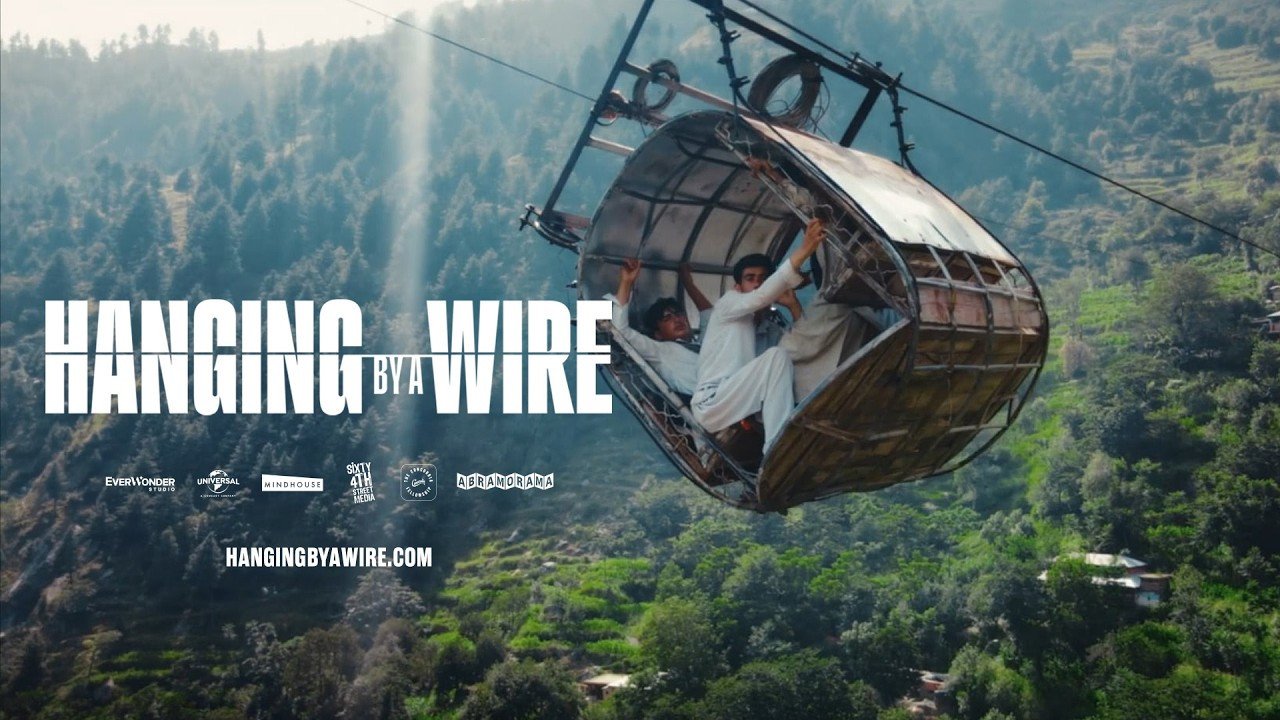
Hanging by a Wire ends after more than fourteen hours of rescue work, but the documentary does not reduce the operation to one heroic intervention. The children survive because local rescuers, families, officials, police, military personnel and others keep adapting as each plan creates a new problem.
Spoiler warning: This article explains the final rescue shown in the 2026 documentary Hanging by a Wire.
Why the first rescue plan becomes so dangerous
The cable car is left suspended after the line fails, with six schoolboys and two adults trapped high above the ravine. Reaching them is only the beginning. Every movement has to account for damaged cable, distance, wind, exhaustion and the limited ways rescuers can communicate.
One local rescuer crosses toward the stranded car and helps establish a route using rope and light signals. He eventually takes three boys onto the line toward safety. What looks like progress quickly becomes another test of endurance when the pulling system does not work as expected.
What happens when the rescuer has to pull himself by hand
With coordination breaking down, the rescuer spends a long stretch hauling himself and the children along the line by hand. The documentary keeps the physical cost visible instead of presenting the movement as a smooth technical solution.
At one point he is so exhausted that he loses his grip and slides backward. His hand later becomes trapped in the rope, and poor communication nearly sends the group back toward the cable car. Reaching the ground does not mean he can simply repeat the trip: his arm is injured badly enough that he cannot return.
How the final passengers are brought down
The rescue continues after the local attempt has reached its physical limit. Military and special-forces personnel become part of the later operation, using communication equipment and a new approach to finish what remains.
The documentary’s closing news coverage emphasizes the combined effort. The operation succeeds after more than fourteen hours, with locals, media, police and the army all present around a rescue that changed shape repeatedly throughout the day.
Why the film leaves the cable car hanging
The final image is not a victory parade. The abandoned cable car is still suspended above the valley, described as something like a souvenir for everyone who lived through the event.
That image keeps the danger visible after the people are safe. It also prevents the documentary from pretending that rescue erased the conditions that created the emergency. The object remains where it failed, while the story of the rescue belongs to the people who improvised around that failure.
That makes Hanging by a Wire different from fictional survival stories where the ending hinges on a last-second arrival. In The Mist ending explained, timing turns rescue into tragedy. Here, the long delay is terrifying, but persistence and changing tactics eventually keep the stranded passengers alive.
The documentary’s ending therefore belongs less to a single savior than to accumulated knowledge: local familiarity, physical courage, official resources and the willingness to abandon a plan when it stops working. The cable car remains in the air; the people do not.
0 comments