

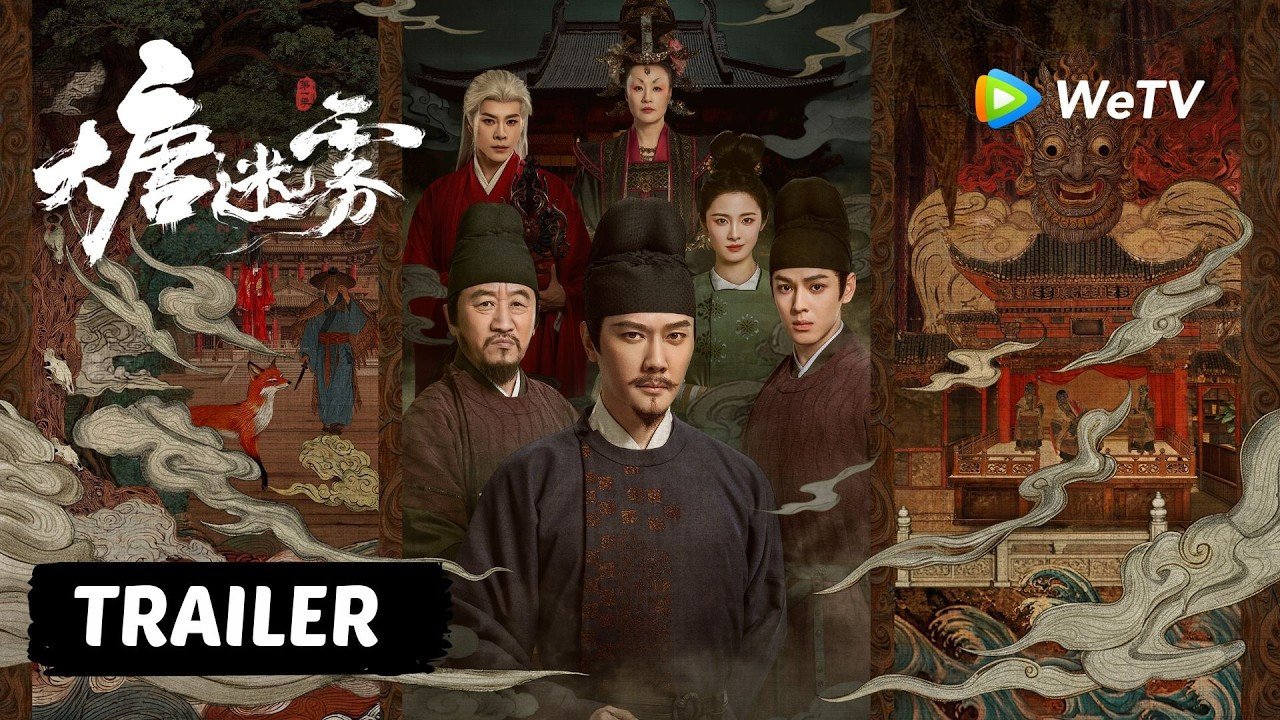
The Tang Mist does not end by revealing one mastermind and declaring Quzhou clean again. Di Renjie solves the final case, but Episode 25 keeps widening it: Sun Mao’s corruption depended on Huiwu, wealthy merchants, political patronage and a court culture in which people kept passing the cost downward until ordinary lives were destroyed.
Spoiler warning: This article explains Episodes 24 and 25 of The Tang Mist Season 1.
Huiwu was Cao Jin before he became an abbot
The finale finally gives Di Renjie the history behind Huiwu. His original name is Cao Jin. His father was framed and executed by a magistrate who protected the powerful, and Cao spent years trying to pass the imperial examinations so he could become an official and overturn the case. He failed four times.
Sun Mao found the weak point in that ambition. While he was still a low-ranking clerk, he convinced Cao that the right payments and connections could buy him a post. Cao sold his ancestral home, ran out of money and eventually stole from Mingguang Temple. When the theft was discovered, the confrontation ended in fire and death. Sun Mao then used the crime as leverage, helping turn Cao into the abbot who could be useful to him.
The Repentance Room was really an extortion machine
Once Huiwu controlled the temple, the spiritual language of repentance became part of Sun Mao’s business. Huiwu drugged wealthy visitors, pushed them to confess secrets and encouraged them to surrender property as a way to relieve their guilt. If persuasion failed, Sun Mao could use the secrets as blackmail.
That explains why so much property accumulated around a prefect who presented himself as respectable. The temple was not separate from political corruption; it was one of the mechanisms that made the corruption profitable. Huiwu understands this too late. He describes himself as someone who began with honest intentions and then kept sinking because every compromise made the next one easier.
Why Sun Mao suddenly needed even more money
Di Renjie is not satisfied once the immediate crimes have been explained. The missing fortunes are too large, and Sun Mao had recently become desperate to seize the He family estate. The final clue leads to a secret construction project: a Shrine of Longevity for the Heavenly Empress, complete with a gold statue.
Sun Mao had been trying to rise through the court by sending gifts and flattering messages through Imperial Censor Jiang Erwen. When the demands grew, he pushed the same pressure onto the people below him. The finale refuses to accept the excuse that he had no choice. Di’s answer is that Sun Mao’s hunger for status created the chain that trapped him in the first place.
Wang Zhong’s execution is meant to remain uncomfortable
The final case also separates legal guilt from moral simplification. Wang Zhong is responsible for killings, and Bai Zhi covered evidence to protect him. He is executed. Yet Di Renjie erupts at the crowd when they reduce him to a monster, reminding them that Wang Zhong was also a soldier who bled for the Tang and was later abandoned, mocked and pushed to the margins.
The speech does not acquit him. The execution still happens. What Di refuses is the comforting idea that punishment allows everyone else to pretend they had no part in the conditions that produced the tragedy. Bai Zhi and Wang Zhong’s final exchange makes that tension even harder to dismiss: love does not erase what they did, but neither does guilt erase the human beings the town had already stopped seeing.
What Di Renjie actually changes at the end
Di’s memorial turns the local case into an accusation against the bureaucracy. He warns that if officials keep serving factions and private appetites instead of the people, another Sun Mao will simply replace the last one. The court responds by condemning the corruption, halting the shrine project and ordering changes connected to Quzhou.
Even then, the series does not pretend the system has been purified. As Di leaves, the conversation returns to Huiwu and the imperial examinations. Di acknowledges flaws in the system while also refusing to blame every one of Huiwu’s choices on those flaws. He orders a reinvestigation of Huiwu’s father’s case because an old injustice still deserves correction, even when the son later became guilty himself.
That is the finale’s clearest idea: justice is not the same as finding one evil person. The Tang Mist closes its first season with Di Renjie still on the road because every solved case can expose another structure underneath it — and because seeing how someone was failed is not the same thing as excusing what they chose to do next.
0 comments