

Spoiler warning: Spoilers for the complete film or season named below.
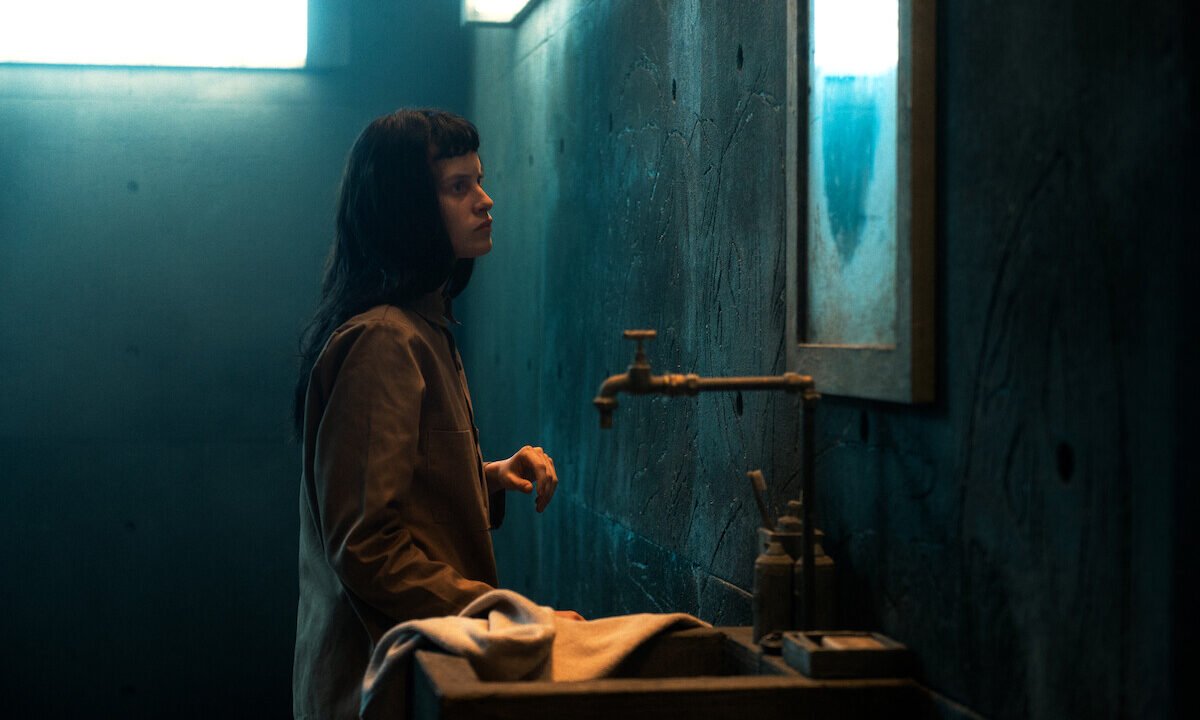
Perempuán abandons a possible escape to take a child to the bottom of the Pit. The Platform 2 also changes our understanding of its chronology: most of this story happens before the original film, while the credits connect the two protagonists.
Why does Perempuán stop trying to escape?
Her plan is to appear dead so the workers remove her with the corpses. During the monthly interval, she awakens while they are reorganizing the prison. Then she sees a child being placed inside.
The discovery connects to the death she blames herself for outside the Pit: a boy was killed by one of her sculptures. Helping this child offers an action she can take now, rather than another punishment she can impose on herself.
She unties herself and carries him downward. Her goal has changed. Getting herself out is no longer the only measure of whether the attempt succeeds.
Is this happening before the first film?
Trimagasi’s presence establishes the earlier timeline. He becomes Perempuán’s cellmate before his imprisonment alongside Goreng in The Platform. The number in the title does not describe the order of those events.
The final credits then bring Goreng and Perempuán together at the bottom. Their recognition and embrace establish a connection, but the film does not supply a complete account of their past relationship.
That gap should remain a gap. A reunion is evidence that the characters know one another; it cannot establish every detail of how, or when, they first met.
Does reaching the bottom mean freedom?
A woman tells Perempuán that the child must continue upward without her. Perempuán is led into the darkness. Neither that moment nor the reunion shows her returning to ordinary life outside the prison.
The film’s competing factions have tried to impose order on food distribution through rules and force. Perempuán’s last decision is directed toward one vulnerable person instead. It is a limited act of care inside a structure that remains intact.
The bottom can invite religious or psychological interpretations, but those readings should not be presented as a confirmed map of the afterlife. What the ending clearly changes is her purpose: she stops measuring the escape solely by whether she gets to leave.
Sources: official ending breakdown; official interview or additional context.