

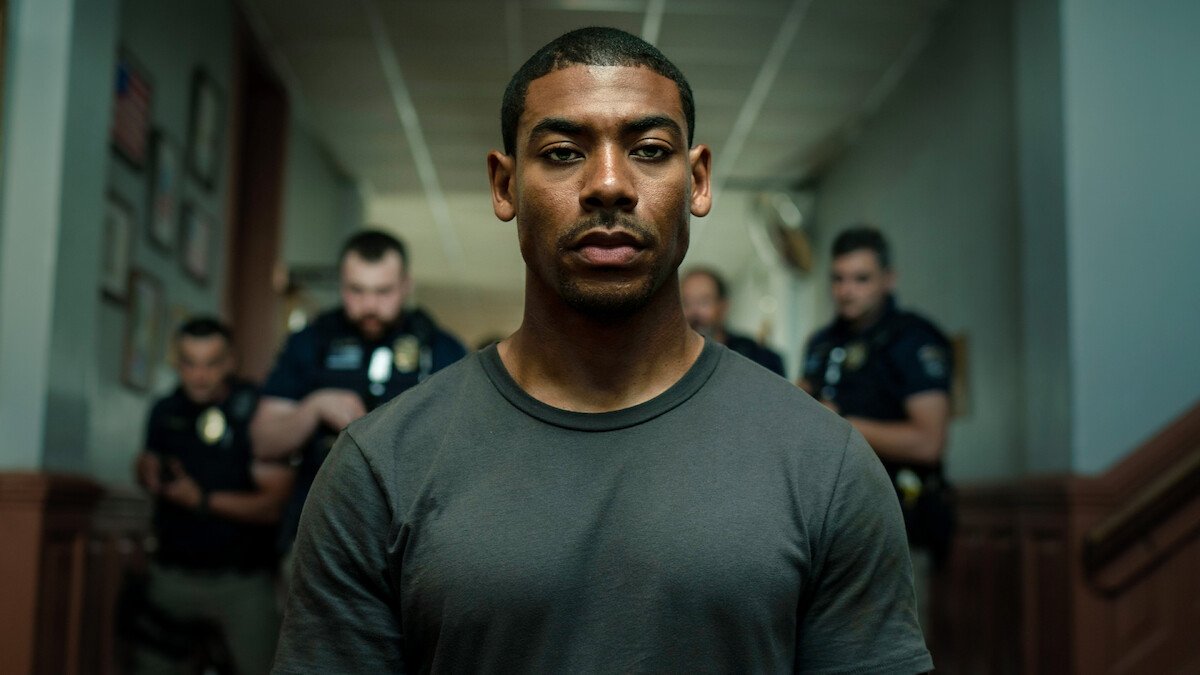
Spoiler warning: Spoilers for the complete film.
Marston is Summer’s informant, and Terry escapes with him and Summer while preserving evidence of police misconduct. Rebel Ridge ends at the hospital, after surviving officers finally obstruct their chief rather than continue protecting him.
Why is the informant’s identity important?
Terry assumes Sims is the officer secretly helping Summer. Marston instead reveals himself when Terry is in danger at the station.
The correction complicates Terry’s judgment because Marston participated in the original stop that set the ordeal in motion. Helping now does not erase that involvement, but it changes what he is willing to do when the chief’s control becomes openly murderous.
Sims later acts too, driving Burnne off the road during the pursuit. The ending gives the officers separate decisions rather than a single revelation that everyone except the chief was secretly innocent.
Why protect the dashcam?
Terry needs the violence recorded, not merely survived. Evidence offers a route beyond the town’s ability to explain away its own conduct and preserve the arrangements benefiting it.
That objective distinguishes the climax from a private revenge mission. His cousin is already dead; defeating Burnne cannot bring him back. Recording what happens can make the system’s behavior harder to conceal.
The hospital is therefore both a destination for care and a place where the evidence can remain secure while Terry stops moving.
Does the final bench scene mean justice is complete?
No trial or final institutional reform is shown. Terry has achieved the immediate tasks of keeping people alive and retaining a record, not a guarantee of every result that should follow.
Sitting down matters because the film has made even basic safety difficult for him to obtain. For the first time in the closing sequence, action is not the condition of remaining alive.
The rest is earned by surviving concrete choices, not by declaring the world repaired. The evidence remains important precisely because the larger work has not yet been completed when Terry closes his eyes.
Sources: official ending breakdown.