

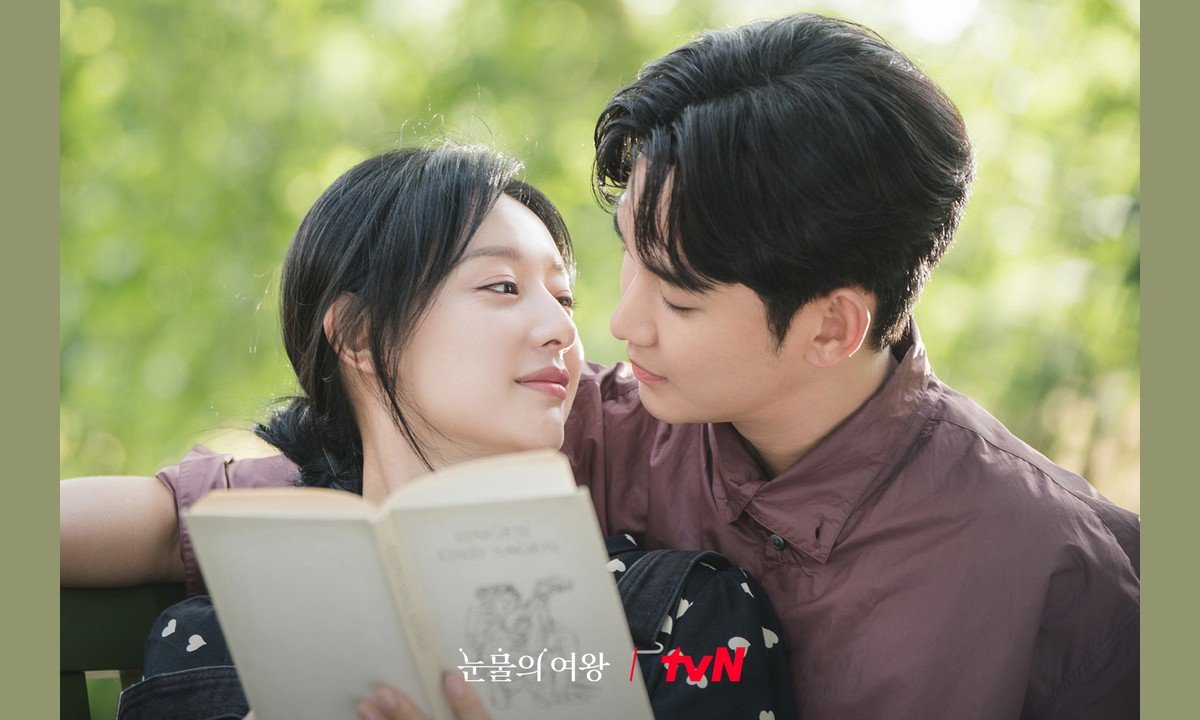
Queen of Tears does not make Hae-in’s second chance with Hyun-woo depend on recovering every lost memory. The memory that changes her answer is the painful one: she remembers how their first marriage broke down, and that makes the future less frightening rather than more.
Spoiler warning: This article discusses Episodes 15 and 16 of Queen of Tears.
Near the end of the finale, Hae-in admits she would have rejected a new proposal the day before. They are finally getting along again, and she is afraid marriage could ruin what they rebuilt. Then her “worst memory” returns.
The memory does not restore the romance — it explains the failure
Hae-in remembers the small things that hardened into distance: arguments over trivial matters, saying things they did not mean, protecting their pride and letting misunderstandings sit between them. Her most specific realization is also the most useful one. Instead of knocking on Hyun-woo’s door, it became easier to stay in her own room and resent him.
That memory hurts, but it also gives her something the blank space after surgery could not: a cause. Their first marriage was not destroyed by one unavoidable truth about them. They stopped crossing the distance between two rooms. Hae-in can imagine trying again because she now knows the habit she does not want to repeat.
Hyun-woo reaches the same conclusion from the opposite direction. He says taking another bullet for Hae-in would be less frightening than slowly becoming exhausted and disappointed in each other again. He cannot promise perfection. What he can promise is to stay and mend things when they break.
So Hae-in says yes — and immediately slows him down. She wants time. They joke that he can hug her only after they have held hands at least five times, then start making deliberately ordinary plans: breakfast together, daily walks, a trip every season.
The 2074 epilogue answers whether that promise lasts
The finale eventually stops testing the couple and lets time move. The closing montage talks about days passing faster until Hae-in’s gravestone appears with the date April 7, 2074 and the inscription that spending her life with Hyun-woo was a miracle.
The last idea is introduced in their own words: when only one of them is left, the other can come meet them. The lavender-field reunion that follows can be read as an afterlife, a memory or a symbolic farewell; the series never builds a literal rule for it.
What the ending does settle is simpler. Hae-in’s worst memory does not trap her in the first marriage. It gives both of them a chance to name what failed, choose different habits and spend the rest of their shared life practicing that choice.
1 comment