

Spoiler warning: Spoilers for the complete film.
Jacopo is the villa’s rightful heir, but the mercenaries take control and the surviving group escapes into the woods. The Decameron separates legal ownership from the place where its characters can actually remain alive together.
Who survives the attack?
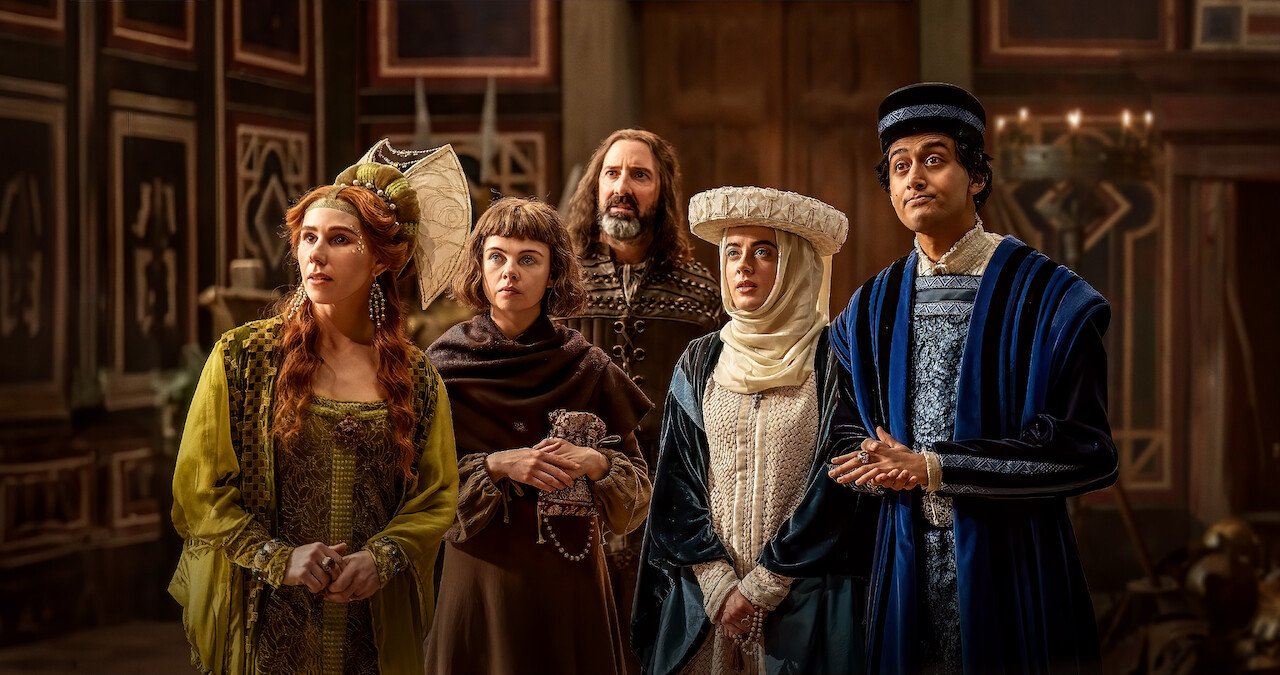
Sirisco, Licisca, Filomena, Misia, Stratilia and Jacopo make it out. Tindaro and Panfilo sacrifice themselves while the others escape.
Their survival rearranges the household. People previously defined by service and dependency can form a group without requiring the villa’s original chain of command to organize it.
The inheritance still matters to Jacopo’s identity, but holding a claim cannot stop armed men from occupying the property. The ending does not reward the revelation with an effortless transfer of power.
Why does Misia kill Pampinea?
Pampinea has sustained Misia’s devotion through the promise of a child they could raise together. Learning that the pregnancy was invented exposes the future she was using to keep her servant attached.
Misia kills her during the finale. The act ends their relationship without proving that Misia has instantly worked through the grief and dependency behind it.
Her freedom is therefore not identical to a new romance. It begins with the possibility of existing beyond the person whose needs had organized her life.
Are the survivors dead in the final scene?
The peaceful gathering can invite an afterlife interpretation, but creator Kathleen Jordan says that was not her full intention. The scene works as the survivors sharing stories after escaping.
Its unusual serenity does not require a hidden revelation that the earlier escape failed. The contrast can express relief without undoing the events leading to it.
Storytelling becomes something they share rather than another service extracted by a master. The group has lost the estate and many of its members, yet its final laughter provides a form of collective life the supposedly secure villa could not sustain. Ownership and shelter have separated; for this moment, belonging remains with the people who left together.
Sources: official ending breakdown.