

Spoiler warning: Spoilers for the complete television adaptation; discussion of sexual violence.
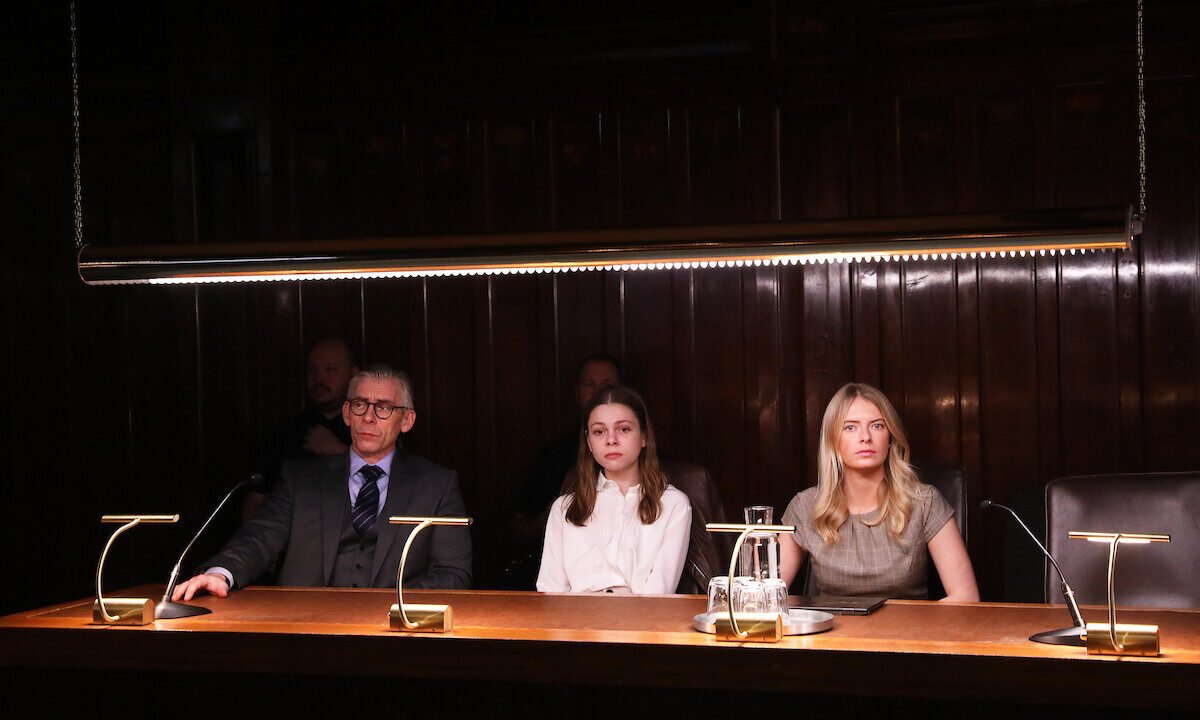
Stella killed Chris, but the court finds her not guilty because the case does not prove it beyond reasonable doubt. A Nearly Normal Family saves the full account for flashbacks that reveal what the verdict cannot establish.
What happened outside Chris’s apartment?
Stella discovered him assaulting Amina and intervened. As the women fled, he pursued them with a knife, then dropped it after falling. Stella picked it up and stabbed him when he lunged toward her.
The flashback situates the killing inside an escape from violence rather than the jealousy narrative surrounding the investigation. It does not change the fact that Stella is the person who inflicts the fatal wound.
A verdict and a reconstruction answer different questions. The court decides what the available case proves; the audience is later shown events from which that case is incomplete.
How does her family affect the trial?
Ulrika destroys or removes key evidence, while Adam lies about the timeline. Amina’s testimony also introduces the assault and the reasons earlier victims feared reporting what happened.
These actions weaken the prosecution while revealing a family finally acting together around Stella. Their loyalty has a compromised form, because protection now includes concealing information.
That complication matters after the parents’ earlier failure to support her in reporting an assault. The ending does not simply declare them good parents because this time they are willing to intervene.
What changes after her release?
Stella begins the travel she had been saving for. Ulrika ends her affair and attends Alcoholics Anonymous, while Adam leaves the priesthood to spend more time at home.
Those changes give each family member something practical to do beyond the case. They do not certify that every damaged relationship has been repaired.
Stella’s departure is especially important because being protected need not mean remaining permanently inside the household that protected her. The family can start rebuilding while she exercises the freedom that existed as a goal before the arrest, carrying a truth the official judgment does not fully contain.
Sources: official ending breakdown.